
.png)
Dover Mulls Business Improvement District
Officials promote Special Improvement District proposal in advance of December 30 approval vote.
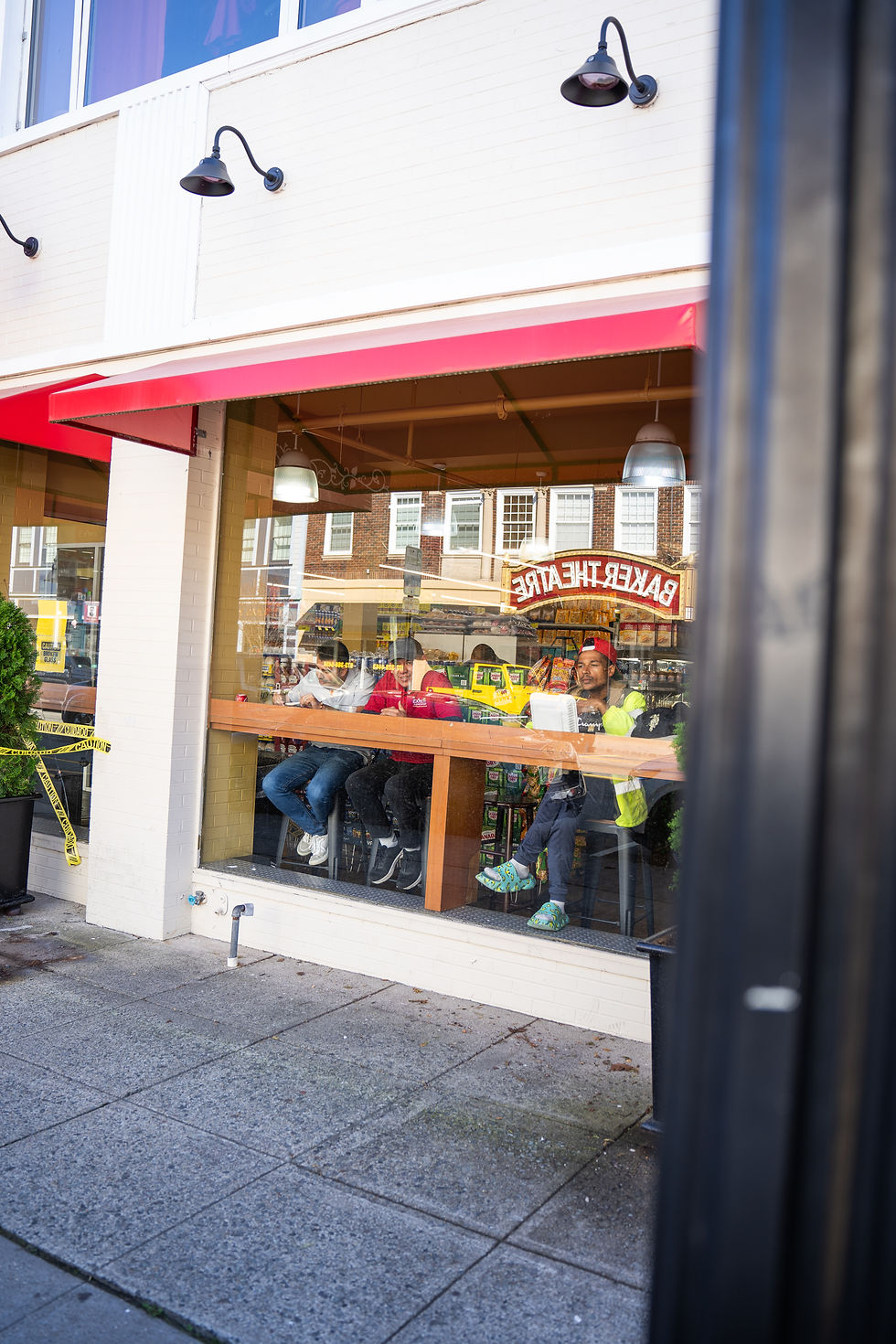
While town officials are eager to promote a new initiative that would designate downtown Dover as a Special Improvement District (SID), local business owners are seemingly apprehensive about a piece of legislation that feels, to some, like a late-season tax hike.
Town officials held an informative session on Tuesday, December 23, hosted by Mayor James P. Dodd, Town Planner Alex Dougherty, and Business Administrator/CFO Edward Ramirez. They spent the evening touting the SID as a "transformative engine" for investment and beautification, but the room’s lackluster turnout left the ambitious presentation echoing in a largely empty chamber. The marginal attendance could be attributed to business owners and residents/consumers doing their best to conduct holiday business on the two days before Christmas.
Mayor Dodd argued that the designation—which requires the creation of a private nonprofit entity—could generate $1.2 million annually. That cash, along with the unlocked state and federal grants, is being framed as the only way to polish Dover’s "good bones" and fix a downtown that Dougherty admitted "isn't getting there quick enough."
Dougherty explained that the district will include the properties along Salem Street, down Blackwell Street, up to Bergen, and along US Route 46, towards Pequannock Street, back along Route 46, along Bassett Highway, back towards the train station, to South Moore Street, and back towards Salem Street. Each parcel, according to the current text of Ordinance 54-2025, will be assessed at a rate of .7 percent of the municipal tax levy of that parcel. The assessment will only apply to commercial and mixed-use properties within the district. Parcels owned by the municipal government, including those of the county, town, religious organizations, and educational facilities, will be exempt.
“This is an opportunity for the SID itself and all of the businesses to utilize this program and capitalize on that train station as a gateway,” Dougherty said. “Every major downtown in New Jersey that you can think of has an SID, and it's because they market their downtowns, so it is an opportunity to put Dover back on the map.”
After Dougherty opined on the benefits of the program, Natalie Pineiro, the executive director of Downtown New Jersey, spent the majority of the 50-minute meeting explaining how other towns, such as Somerville and Montclair, have successfully bolstered their downtowns using public grants and other funding sources.
Pineiro, who also serves as a consultant for business district revitalization, pitched the SID as a way to run Dover’s downtown as a type of public-private partnership.
Pineiro’s presentation was centered on the idea that Dover must transition into an "experience economy" to survive the rise of online retail. She argued that the SID would transform the downtown into a managed destination where the $1.2 million in annual assessments would fund a curated atmosphere through placemaking initiatives, such as seasonal festivals and enhanced streetscapes. This model, she said, would allow the district to function like a private entity that does not have to rely on local government to create the social atmosphere necessary to bolster retail sales and foot traffic.
Although Pineiro and town officials showed unilateral support for the proposal, the feedback from the community was less than positive. The session culminated in only one public comment, which came from a resident whose family has operated a business in Dover for decades.
“I am trying to be positive,” he said. “I just don’t like it thrown at me all at once. When I look at it, it’s another tax that is going to be added. So what am I going to do? I am going to pass it down to my customer. That’s the bottom line.”
Dodd countered that the proposal had been in the works since 2018 and that the town had to resort to creating a special improvement district due to a deficit left by the previous administration.
Town residents will be able to submit public comments on the legislation at the next Town Council meeting, scheduled for 10 a.m. on Tuesday, December 30, when the legislation, known as 54-2025, will be up for second reading and adoption. As of December 26, the agenda for the Council meeting had not yet been posted.
Mayor Dodd, Ramirez, and Dougherty declined opportunities to respond to questions after the meeting.


Comments