

Do You Know George Richards?
You’ve seen the activity at the building that was named for him. Now fi nd out what he meant to Dover.
By Heath Rumble
EDITOR’S NOTE: Welcome to the first of a two-part series about the Richards Building.
It is owned and being redeveloped by West Morris Capital, parent company of DOVERNOW Magazine. First up, the history of this iconic building.
Dover became its own town on April 1, 1869. George Richards led the movement to incorporation and was elected its first mayor. The wealthy industrialist and banker owned companies in iron production, railroads, mining, and lumber. Within a few years, he’d transform one of his stores into the three- story building that still bears his name.
“He had businesses everywhere, throughout the country,” says Linda Mullin, trustee at the Dover Area Historical Society (DAHS) and fourth-generation Dover resident. “He really added to our town in so many ways.” Richards replaced his store’s wooden frame with brick, creating a building that shaped commerce and social connection throughout Morris County and beyond for generations.
Now, over 150 years later, the 52,000-square- foot building at the corner of North Sussex and West Blackwell streets is poised for its next act as Dover’s multipurpose hub. A VISIONARY’S INFLUENCE
When Richards reached Dover in the 1850s, the Morris Canal, which snaked through town, had just been expanded, and a state-spanning railroad had recently integrated Dover. New iron-forging processes were revitalizing nearby ore mines, many of which Richards managed. So Richards strategically bought a centrally located store—beside the canal, a block from the railroad, and amid Dover’s many mills. He provided customers with essential provisions, groceries, and hardware, available for in-store purchase or delivery by horse-drawn carriage. DAHS newsletters indicate the brick facade was erected sometime after 1870. In an 1880 photo, it’s seen amidst a massive parade— bricks almost invisible behind the many flags and banners—for James Garfield’s presidential campaign. Revelers amassed around the Richards Building, enjoying the festivities that were heavily promoted by The Iron Era, a newspaper Richards partly owned that moved above his store soon after. From the building’s earliest days, people from many walks of life passed through its doors, customers and employees alike. “I think we’ve primarily been a working-
class town,” Mullin says of the earliest customers. Chris Murphy, president of West Morris Capital, and overseeing the building’s development, agrees. “One of the things they sold was mining supplies,” Murphy says while giving a tour of the building. “It was a town of working people who were in this resource-intensive business.” Beyond local miners on small ventures and other working-class customers, the store saw scores of employees over the decades: stock boys, delivery drivers, clerks, cleaners, and many more. Boatmen and mule drivers worked the Morris Canal, which flowed in the shadow of the Richards Building. But they always found work there when the waters froze in winter. They stocked carriages for deliveries and managed the horses and mules that pulled them. Pulleys and hardware to hoist goods from barges were drilled into what used to be the building’s exterior wall. The holes were found during this year’s renovations.
Like the man who built it, the Richards Building can’t be confined to a single purpose. It was the beating heart of retail sales, pumping goods through the region, while The Iron Era newspaper—one of the region’s few in those days—served as the informational nerve center. It reported on local crime, workplace accidents, and daily town life, including church politics and the occasional band of men causing a nuisance. One can imagine reporters coming back from pursuing a hot story, rushing into the building, ascending the stairs above the bustling store, then busily checking their notes and banging away on typewriters in The Iron Era offices. George Richards’ mayoral office, on the top floor of the building, featured a large, gas- chandelier-lit dormer room with windows granting an ideal view of Blackwell Street. From there, he spearheaded projects such as connecting Dover’s local train lines to larger rail networks and building a water plant for a revamped fi re department, in response to a fire in 1885 that damaged the historic Baker Opera House. Richards could go from meetings with officials, bankers, and businessmen, then walk down the hall to discuss his initiatives with the The Iron Era editor. Along the way, he’d stop by the offi ce of his lawyer, Mahlon Pitney, who later served on the U.S. Supreme Court. The building’s impact on George Richards’ chosen town, where he lived in a mansion southwest of downtown with his wife and two sons, positioned Dover as the economic powerhouse of Morris County.
THE NEXT GENERATION
George Richards Jr. took over many of his father’s enterprises, including the store, when Richards Sr. died in 1900. By this time, Richards Jr. had already been leading the store as his father grew consumed by local politics and other businesses. The younger Richards turned the store into one of the region’s biggest retailers and is credited with adding several specialty retail departments, including sporting goods and furniture. The turn of the century delivered a revolutionary boost to the Dover business; trolley tracks laid on Blackwell Street whisked shoppers from Morristown and Succasunna and dropped them off right at the Richards Building. The George Richards Company soon became the top retail operation in Morris County, generating annual revenues of $300,000 ($10 million in today’s dollars).
Richards Jr.’s plans demanded more space, so he doubled the building’s footprint in 1900 and expanded again between 1909 and 1916 into the current form of the West Blackwell and North Sussex portion of the building. These additions created more local jobs, from carpenters and bricklayers to retail clerks, stock boys, and managers, even obscure roles like fire insurance inspectors (who made some of the few records of the building’s evolving footprint in their maps). A present-day construction worker uncovered a grocery list with ‘Stock Boy’ written beside it from the tail end of the younger Richards’ tenure—signed and dated, “Jack Barnes, October 13, 1925”— putting a name on one of those employees.
RETAIL RUNS DOVER
While Dover still bustled with industry, mills, and mines, the Morris Canal was on its last legs as the railroads overtook it. Other trends were brewing nationally that would soon shape the building’s future. Retail was shifting to “variety” or “five-and-dime” stores that sold everything from affordable household goods and toys to stationery and candy. Richards Jr. passed away in 1916, leaving the store to Richard Sr.’s brother, Albert, and his son, Henry. They sold the building in 1927, and it became Swingle’s Five and Dime. Swingle’s was ultimately overwhelmed by retail chain F.W. Woolworth’s, which opened in 1936 on the opposite corner.
In 1940, J.J. Newberry, a competing regional chain store, took over. “Newberry’s,” as locals called it, later expanded its footprint to the corner of Bassett Highway and North Warren Street as part of a larger municipal project to create the Dover Shopping Center. In competing with the relocated Woolworth’s, JCPenney, supermarkets, and a bowling alley, the Richards Building had a major advantage: size.
“This was much bigger than Woolworth’s. I mean, this was big. Big. Big!” Mullin recalls. “Every floor had a different genre where you shopped. You ate at the lunch counter. The [pets] were downstairs [in the basement]. You always got your turtles downstairs from Newberry’s.”
The lunch counter, part of Newberry’s expansion, quickly became a destination. Longtime resident Dorothy McGrath wrote to The Daily Record newspaper upon Newberry’s closure in the early 1990s, saying the store was “once the mecca of Dover. This gathering place for young and old alike.” McGrath shared the thrill of sitting on the lunch counter’s stool as a child. “Then, as a teenager, the store served as a meeting point
for me and my friends.”
Newberry’s thrived until 1977, when the Rockaway Mall opened a couple of miles north. It added to the losses Dover had started seeing a decade earlier when U.S. Route 80 opened, bypassing local roads and bustling downtowns. Businesses began leaving Dover to follow customers to the mall. Soon, Newberry’s was the only store left from Dover’s glory days, and it was frequented by seniors at a nearby assisted living facility who relied on the store’s proximity and nostalgic atmosphere. “I go over there every day,” 74-year- old Elizabeth Whiteman told The Daily Record when the closure was announced. “We congregate and talk.”
In 1992, Newberry’s parent company announced it was closing the Dover store. Mayor Stephen Shukailo, whose mother had worked at the store as a schoolgirl, couldn’t save it. The antique centers that opened afterward created fond memories for local shoppers, and Dover Business College turned the top floors into classrooms. Berkeley College acquired the school and launched restoration projects in 2013, forcing the antique center out. Shortly after renovations finished in 2016, Berkeley closed the Dover campus and sold the building to the town.
NEXT STEPS
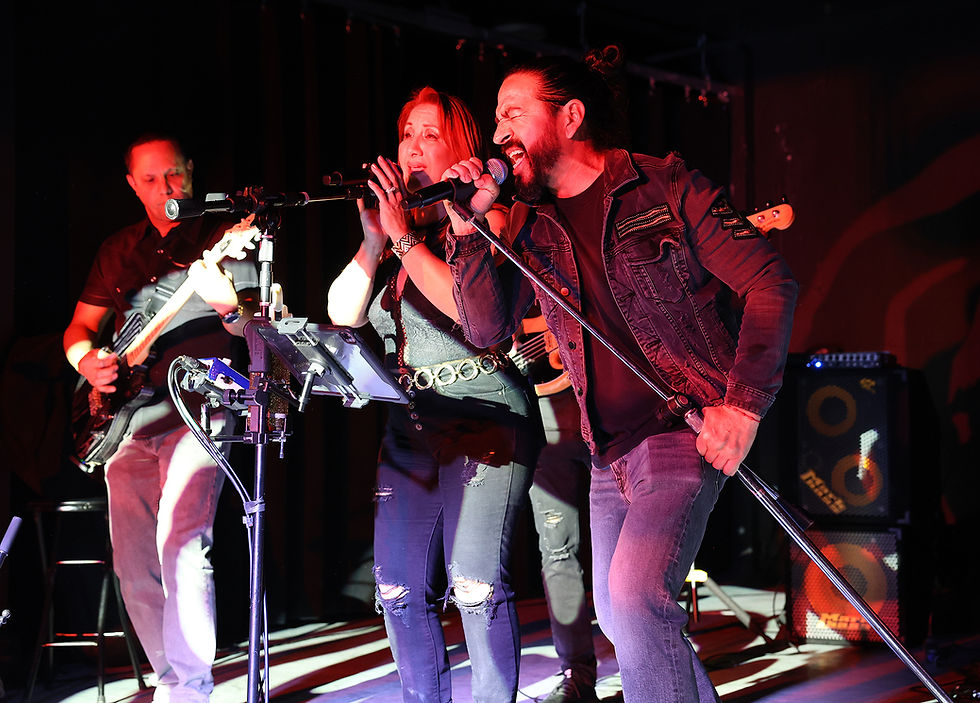
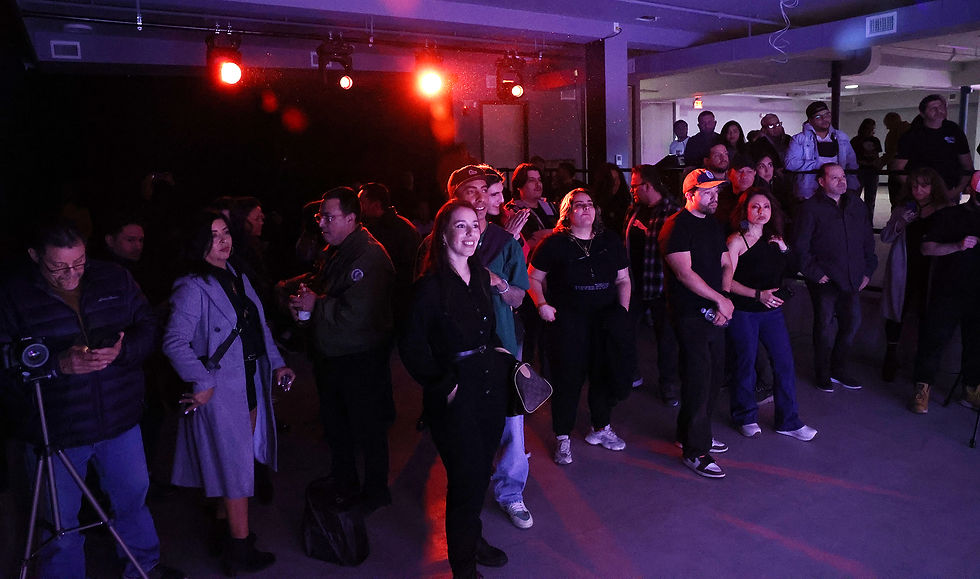
In May 2024, the first work began on the next chapter of the Richards Building. Walter
F. Rodriguez, a Dover native and executive director of The Amp, the building’s newly launched arts education and creation center, is immersed in the town’s past as he brings it back to life. “Dover was the center of commerce in Morris County,” he says. Rodriguez explains that when Rockaway Mall opened, “all of the commerce shifted over to the mall, and unfortunately, the town began to die.”
Rodriguez hopes to turn the trend around. He is part of a growing coalition working with West Morris Capital to redevelop the Richards Building into artistic facilities and
office spaces that support the community. Much like Richards himself, they’re innovating
with a focus on community to advance and enrich Dover. The building’s renovations are restoring its former glory—using reclaimed wood for the furniture installations, correcting structural failures, and even returning the long-missed lunch counter. The Richards Building, nearly as old as Dover itself, cemented in community and forged by generations, is ready to begin again. Next Issue: Meet the men and women who reclaimed the Richards Building’s present and future.


Comments